
Last updated November 16, 2026
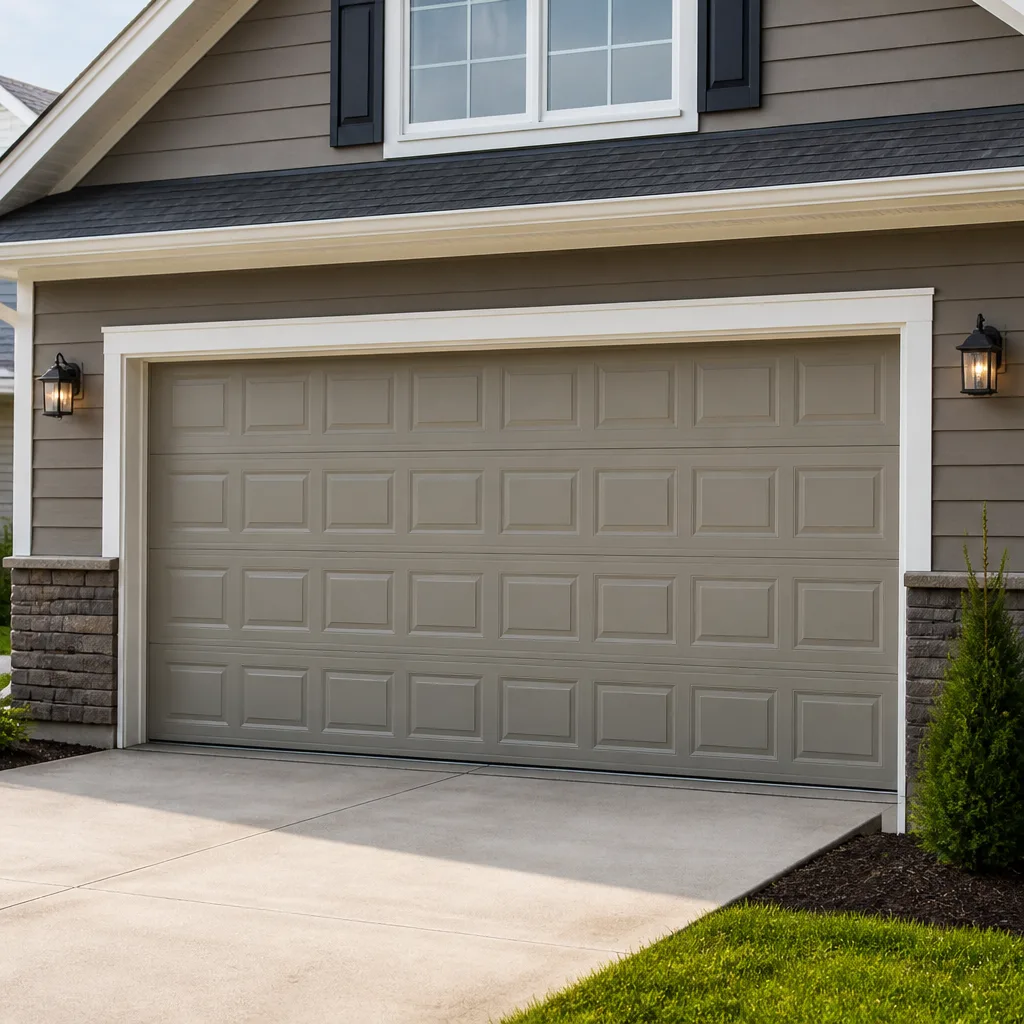 Raised-panel steel
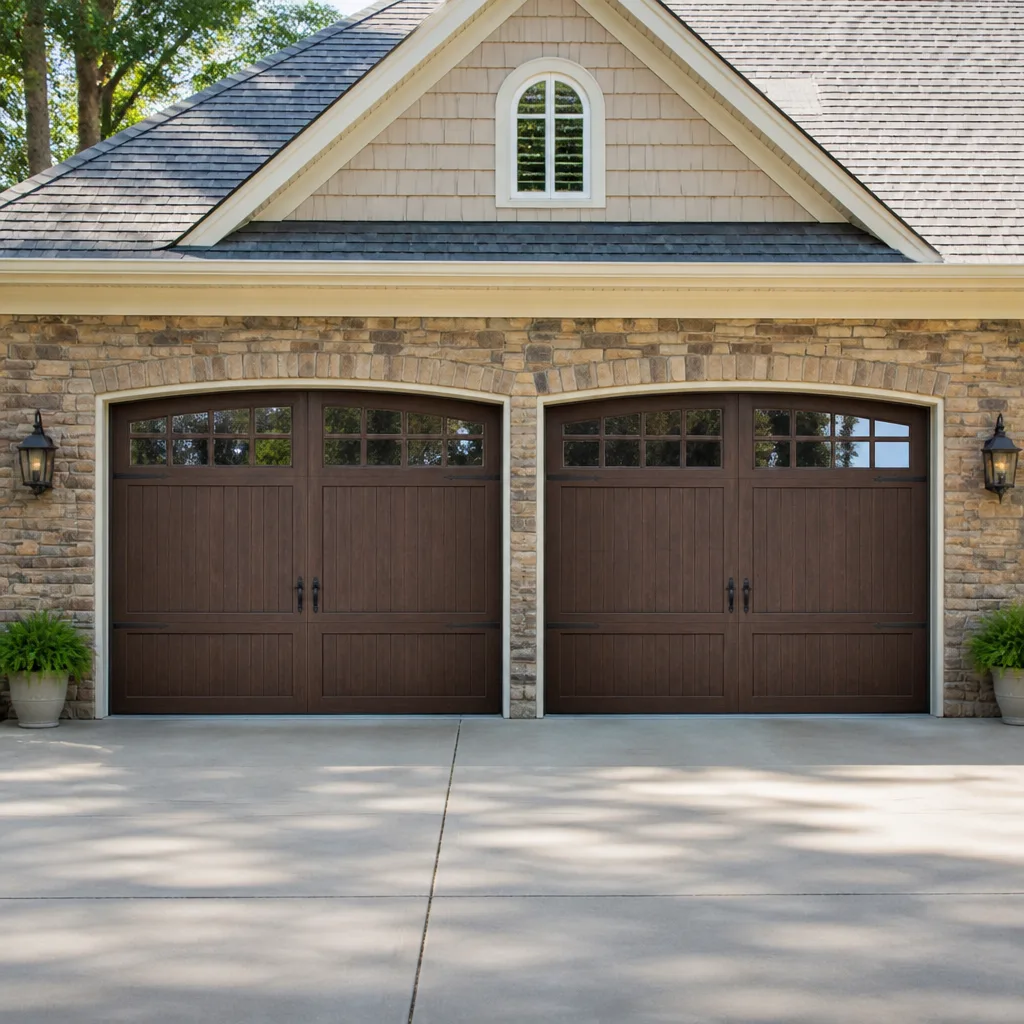 Carriage house
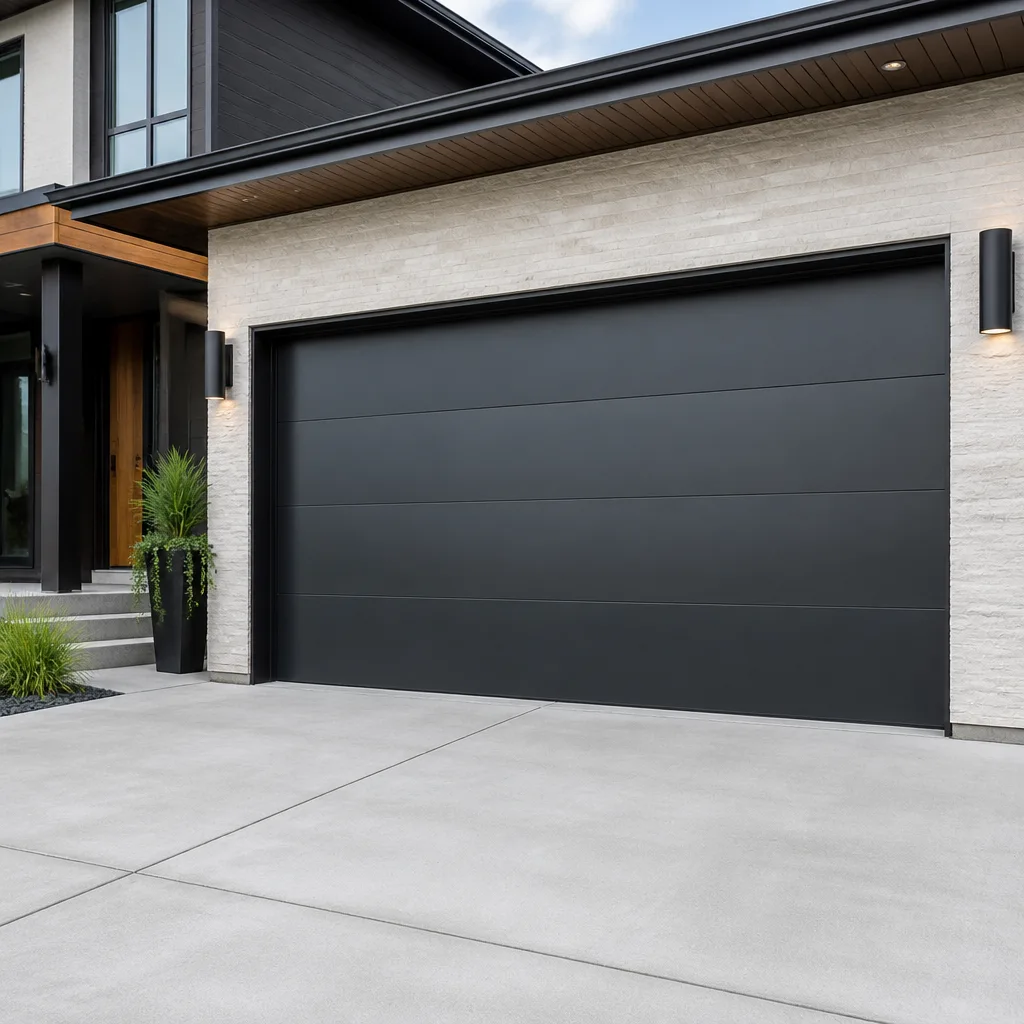 Modern flush
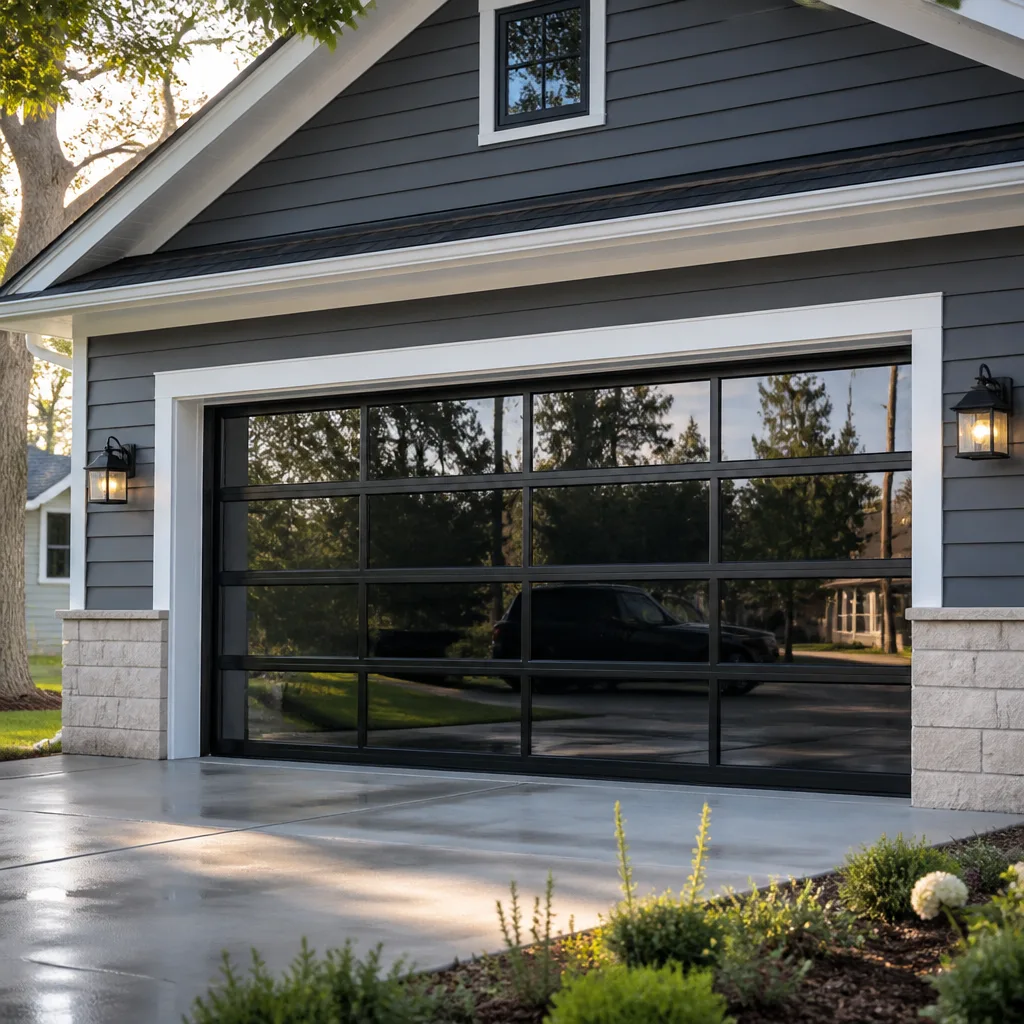 Full-view glass
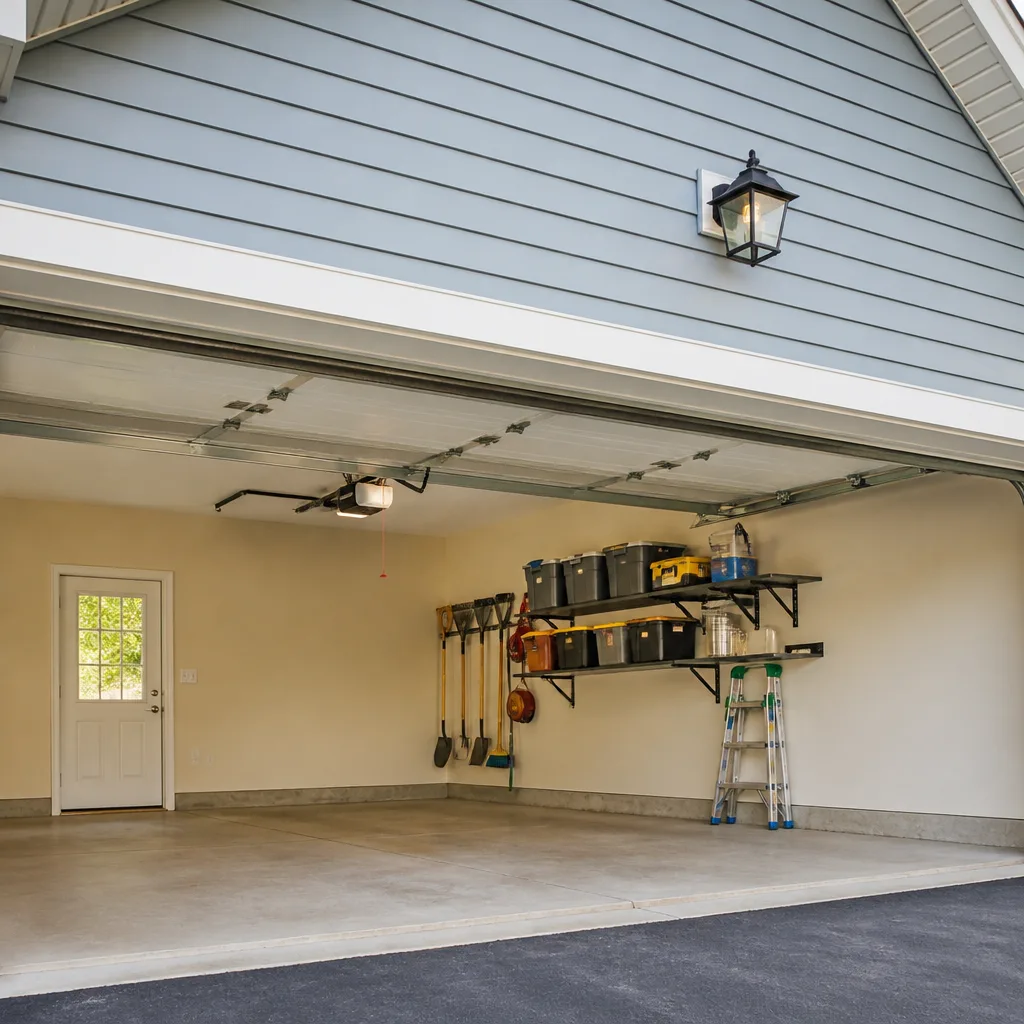 LiftMaster openers
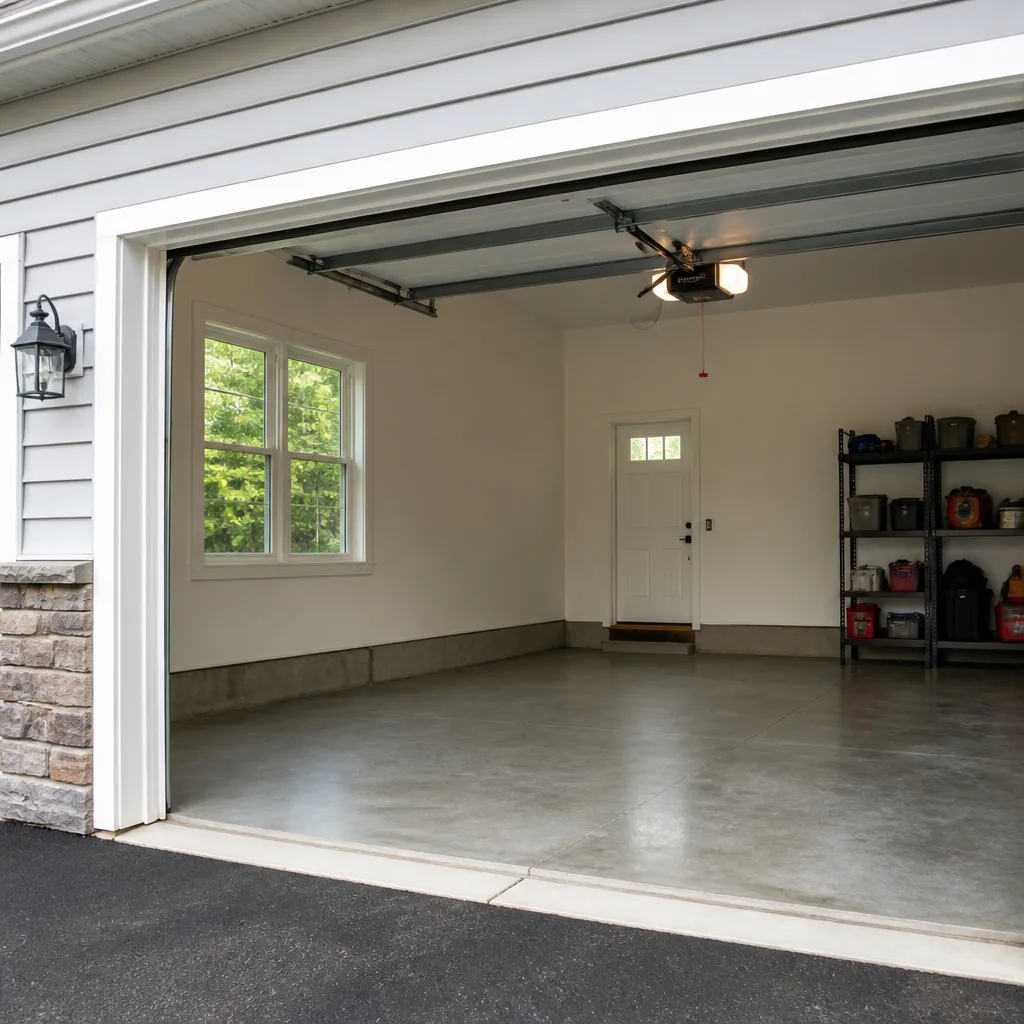 Chamberlain openers
Full 25-point door and opener safety check with every visit - springs, cables, rollers, tracks, and your LiftMaster or Chamberlain opener included
You get a price before we start. It does not change when the pro arrives.
Get your free estimateThe Complete Guide to Garage Doors in Odessa
Most homeowners in Odessa think about their garage door exactly twice: the day it’s installed and the day it stops working. In between, it quietly lifts and lowers more than 1,500 times a year, carries a slab that can weigh several hundred pounds, and holds the largest opening in the house. That’s why a garage door is not a cosmetic feature. It’s the biggest moving mechanical system on the property, and it wears out on a schedule whether anyone is paying attention or not. This guide explains how the parts inside a door system work together, which ones fail first in West Texas conditions, what’s urgent versus cosmetic, and how to use the whole thing as a triage tool for whatever is wrong with your door right now.
Quick Answer
A garage door is a balanced mechanical system built from four pieces: the door itself, the torsion or extension springs that carry its weight, the tracks and rollers that guide it, and the opener that lifts it. In Odessa’s heat and caliche dust, springs, rollers and opener gears wear faster than the national average, so a door that seems fine one month can bind or snap the next. If your door is stuck, noisy, uneven or won’t close all the way, the answer usually comes down to identifying which of those four parts is at fault before anything gets adjusted or replaced.
If your door is down and you need it working today, call (844) 765-2569. We answer 24/7, and outage calls get fast dispatch from 7am to 7pm, Sunday through Friday.
Styles & brands we work with
- Raised-panel steel
- Carriage house
- Modern flush
- Full-view glass
- LiftMaster openers
- Chamberlain openers
Table of Contents
- Why Your Garage Door Deserves More Attention Than You Give It
- How a Garage Door System Actually Works
- What Fails First, Second and Third in Odessa
- How Odessa Climate and Caliche Dust Wear a Door Down
- What Brand Compatibility Really Means on an Odessa Home
- Cosmetic Issue or Safety Failure: How to Tell
- Triage: Read the Section That Matches Your Problem
- The Annual Checks That Actually Matter
- Common Mistakes to Avoid
- When to Call a Professional
- Frequently Asked Questions
- The Bottom Line
Why Your Garage Door Deserves More Attention Than You Give It
Your garage door opens and closes more often than any other moving part of the house. The average door cycles roughly 1,500 times a year, and every one of those cycles loads and unloads the springs, rolls the rollers along the track and engages the opener’s gears. That’s more daily movement than a front door, more than any appliance, and enough over a single year to surface the first signs of wear on the highest-stress parts.
Meanwhile, homeowners routinely service the HVAC system, check the roof after a storm and check on the water heater. The garage door is the one large mechanical assembly that often goes years without an inspection until the day it fails. When it does fail, the consequences are bigger than a stuck car: the door is a security barrier, a wind barrier and the main daily entrance to a large share of Odessa homes.
The weighted parts are what makes it different from other home equipment. A door slab runs from a few hundred to several hundred pounds depending on material and size, and it’s held in balance by springs under tension. That’s why a small mechanical fault, a loose cable, a worn roller or a spring that has lost tension, can turn a quiet door into a heavy, dangerous one in a hurry. Treating the garage door like the machine it is gets you out ahead of that failure instead of cleaning up after it.
If you’re not sure what’s behind a noisy or heavy door, a technician can trace the balance and tension in a few minutes. That’s the sort of thing Odessa Garage Door Service handles as routine work.
How a Garage Door System Actually Works
Every residential door system in Odessa is built from the same five functional groups:
- The door and panels. Steel, aluminum, wood or composite panels on a rigid frame. Panels carry the load, keep weather out and define the look. Most doors here are steel or steel-back insulated.
- The springs. Either torsion springs mounted on a shaft above the door or extension springs running along the sides. Springs carry the door’s weight so the opener only has to nudge it. They are the most safety-critical part on the system.
- The tracks and rollers. Vertical and horizontal guides that keep the door travelling in a straight path. Rollers ride inside the track on small steel or nylon stems.
- The cables and drums. Steel cables wrap around drums at each end of the torsion shaft and connect to the bottom corners of the door. If a cable comes off its drum, the door drops out of balance.
- The opener. A motor, trolley, rail and safety sensors. Modern openers include battery backup and WiFi connectivity, while legacy systems use simpler chain drives.
When one part fails, the other parts take the strain. A worn roller makes the opener work harder. A tired spring drags on the cables. An opener that over-lifts to compensate for a weak spring wears out its own gears. The system is only as healthy as its weakest component, and that’s why diagnosing the actual cause matters more than replacing whatever part is loudest.
The opener itself is worth calling out. If the door lifts fine by hand but the opener strains, binds or reverses, the issue could be the opener, the logic board or the safety sensors, and that’s a job for garage door opener repair rather than a door adjustment.
What Fails First, Second and Third in Odessa
Garage door components fail in a predictable order when they share a climate. In West Texas, that order looks like this:
- Rollers and hinges (first to go). Dust and grit work into the bearings and the rollers stiffen. You’ll hear squeaking, grinding or a rough ride in the track before anything else fails.
- Springs and cables (second). The torsion springs lose tension over many cycles and eventually break. Cables fray or jump a drum. This is the moment the door becomes heavy or unsafe to lift.
- Opener gears and logic boards (third). Once springs are tired or a door binds, the opener works harder to compensate and its gears, capacitors and boards wear out from the extra load.
- Panels and bottom seals (last). Sun, wind-blown grit and general wear eventually show up as dents, rust, degraded weather seals and faded paint. These are functional problems when they let water or wind in, cosmetic otherwise.
That order helps you plan. If your door still opens quietly but the opener is straining, the real problem is probably upstream of the motor. If the door bangs and shudders, the springs are tired. If the door works but you hear grinding in the opener housing, that’s likely opener gears on their way out.
The common denominator in Odessa is dust. Caliche and fine silt get into bearings, hinges and track joints constantly, so the wear curve climbs faster here than it does in wetter climates. Cleaning and lubricating the door harder and more often than the national advice suggests is genuinely a West Texas habit.
When a door stops mid-travel, most homeowners want the fastest route back to normal. In our experience, calling early on a persistent noise saves the cost of a spring, cable or opener later. If you’re unsure which stage you’re in, garage door repair can diagnose the actual failure and give you a written price before any work is done.
How Odessa Climate and Caliche Dust Wear a Door Down
The Odessa climate is hard on a garage door in ways you can measure by looking at the parts. Two things stand out: swinging temperatures and dust.
Summer highs routinely pass 100°F, and winters bring freezing northers followed by fast thaws. Steel and aluminum expand and contract with every swing. Springs, hinges and rollers take that cycle on the chin. Panels that looked tight in January can bow slightly by August, and seals that fit snugly in summer shrink and crack after a cold snap. The result is a door that can feel loose in one season and tight in another, and a system where gaskets and weather seals age faster than in coastal or northern climates.
Then there’s caliche dust. The flat, dry ground around Odessa throws fine silt into the air with every wind event, and that dust settles in tracks, hinges, rollers and the opener rail. That grit is abrasive. Rollers that would last years in a wet climate stiffen sooner here, and hinges that see regular lubrication elsewhere dry out and start to grind. Keeping the tracks clean and the moving parts lubed with a silicone-based product, rather than grease that grabs dust, is a West Texas maintenance habit worth forming.
- Heat: accelerates grease breakdown, hardens seals and stresses panels.
- Temperature swings: cause expansion and contraction in steel parts, tracks and springs.
- Wind-blown caliche dust: works into bearings, rollers, hinges and the opener rail.
- Summer sun exposure on south- and west-facing doors: fades paint, warps wood doors and hardens seals faster than shaded doors.
For a door on an Odessa home, that adds up to a simple point: parts wear as a matter of routine here, not as a surprise. Getting the whole system inspected on a schedule and replacing worn rollers and hinges early keeps the springs and opener working in the range they were designed for.
What Brand Compatibility Really Means on an Odessa Home
Brand compatibility gets oversold as a talking point. Here’s what it actually means on the average West Texas home, where doors get replaced, openers get swapped and springs get matched across a span of years and remodels.
The door brand and the opener brand usually don’t need to match. A Clopay or Amarr door can lift perfectly well on a LiftMaster, Chamberlain or Genie opener. What does matter is that the opener’s lifting force and rail length are rated for the door’s weight and travel. A Wayne Dalton door on a Craftsman opener is fine when the opener was sized correctly. The mismatch comes when an opener is undersized for the door, or when a spring swap changes the balance without the opener being recalibrated.
Springs are the more important compatibility question. Torsion springs are matched to the door’s weight, drum size and cycle count. Trying to match a spring by eyeballing length alone misses the wire gauge, coil count and inner diameter, and that’s how doors end up imbalanced or, worse, fail early. Spring replacement is a job for a trained technician, not a homeowner guess about an old spring. A wrong spring is a safety issue, not a hardware nuisance.
What brand compatibility means from our side of the trade: we service the door and opener you already own. Our technicians are certified to work on eight of the most widely installed brands on the market, including LiftMaster, Chamberlain, Genie, Clopay, Amarr, Wayne Dalton, Craftsman and Raynor. That covers the legacy Craftsman and Wayne Dalton systems found on many older Odessa homes as well as the newer LiftMaster, Chamberlain and Genie smart openers. Nobody has to replace a working door just because it’s not the brand we’d install new.
If you’re already shopping for a replacement, understanding Odessa housing stock helps. Doors on homes built in different decades often need different panel styles, insulation values and opener configurations, and matching what a given home is likely to have saves a lot of guesswork.
Cosmetic Issue or Safety Failure: How to Tell
Not every garage door problem needs a technician today. But some absolutely do, and sorting them by seriousness is the most useful skill an owner can carry.
Treat these as cosmetic or low-priority:
- Faded paint or weathered panels that still operate smoothly.
- A small dent that doesn’t affect travel or seal.
- A worn weather seal that still touches the floor.
- A door that’s slightly louder than usual but lifts smoothly and stays balanced.
Treat these as safety-critical:
- A door that will not stay up when lifted halfway by hand.
- A broken torsion spring, visible gap in a spring coil or an obviously sagging spring above the door.
- A door that closes unevenly, reverses at random, or comes down hard.
- Frayed, slack or off-drum cables.
- A bent track that binds the door or causes the rollers to jump.
- Safety sensors that don’t stop the door when blocked.
Broken springs and cable failures are the ones to treat with real respect. A torsion spring can store an enormous amount of energy, and a cable that fails under load can whip. Never stand under a door held up by a tired spring and never try to adjust a torsion spring or cable yourself. Shut the door, unplug the opener so nobody cycles it remotely, keep everyone off the ladder, and call a qualified technician.
If your door reverses at random or the safety sensors act up, treat that as a safety issue too. garage door opener repair is often a quick visit once the fault is traced, and it’s not worth risking a reversed door or a car that won’t come down cleanly.
Triage: Read the Section That Matches Your Problem
Here’s where to look depending on what your door is doing right now.
The door won’t open at all
First, check whether the opener runs and the door stays put, or whether the opener is silent. If the opener clicks or hums but the door doesn’t lift, the trolley may be disconnected or the spring may have broken. If the opener is completely silent, check the wall switch, the wall outlet and the opener’s own reset. If the door is heavy by hand and the opener strains, stop cycling it and have the springs inspected.
The door opens a few inches and reverses
Safety sensors or travel limits are the usual suspects. Check that the two small sensors at the door opening aren’t obstructed, misaligned or covered in dust (very common in Odessa). If the sensors are clean and aligned and the door still reverses, the travel setting or the logic board may need a trained adjustment.
The door is loud, shakes or bangs
This is usually a worn roller, hinge or spring issue. Cleaning the tracks and lubricating the rollers with a silicone spray helps for mild cases. Persistent banging or shuddering points to a spring adjustment or replacement.
The door is noticeably heavy by hand
That’s a spring problem, full stop. Stop lifting it. A door that won’t stay up halfway is unbalanced, and using the opener to lift it in that state shortens the opener’s life and risks a failure.
The door comes down on something or reverses at random
Treat that as a safety fault. Check the sensors for dust and alignment first, then let a technician trace the opener and closed-limit settings.
The opener needs replacing but the door is fine
This is the one case where a door might outlast two openers. If your door is balanced and smooth, a new opener is a reasonable replacement. If you’re also seeing rust, dents and a door that’s older than the current opener, ask whether a replacement door and a new opener together makes more sense than a new opener on a tired door.
None of that requires getting tools out of the garage. The point of triage is to know whether you’re looking at a today-or-this-week call or something you can schedule.
The Annual Checks That Actually Matter
A quick once-a-year routine keeps most Odessa doors out of emergencies and moves the failure decision earlier where it’s cheaper to handle.
- Test the balance. With the opener disengaged, lift the door halfway by hand and let go. A balanced door holds its position. A door that drops or rises is out of balance.
- Test the safety reverse. Place a small object under the closing door (a roll of tape or a block of wood) and cycle the door. It should stop and reverse immediately when the sensors detect it.
- Wipe the tracks clean. Use a dry cloth to remove caliche dust from the tracks before it gets ground into the rollers.
- Lubricate moving parts. Silicone spray on hinges, rollers and the opener rail. Skip the grease, which grabs more dust than it sheds.
- Inspect the cables and springs visually. Look for fraying, slack or a dangling spring. Do not adjust anything on the springs or cables yourself.
- Check the weather seal and bottom gasket. Winter wind and summer sun wear these out faster here than most homeowners expect.
- Test the opener’s battery backup if it has one. A dead backup battery doesn’t show up until a power cut.
If any step turns up a problem, get it quoted before you spend money on anything else. We can save you the guesswork on the actual fix and give a free written estimate.
Schedule the annual check early in the fall, before the first hard norther of the season, and again after summer if you park a car in the garage every day. That’s the pattern that keeps a West Texas door honest.
See the difference
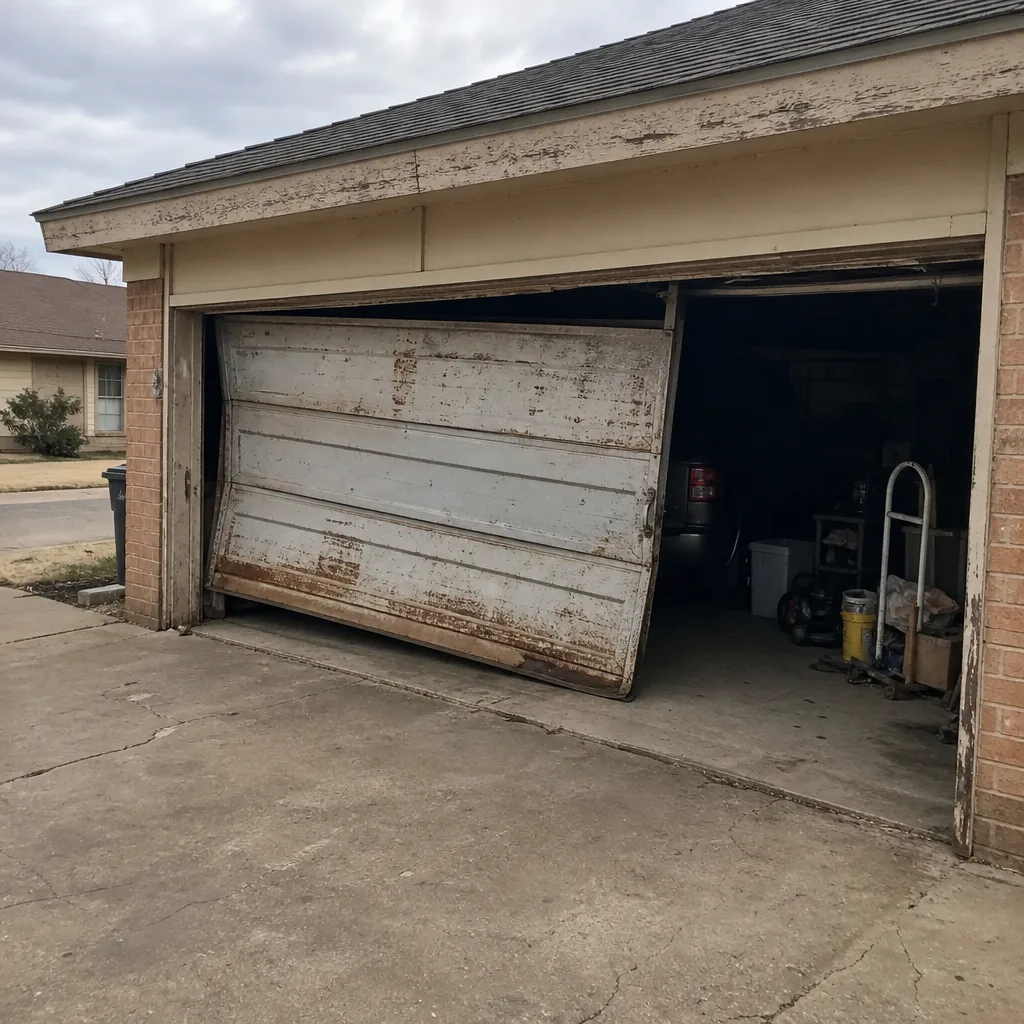 Before
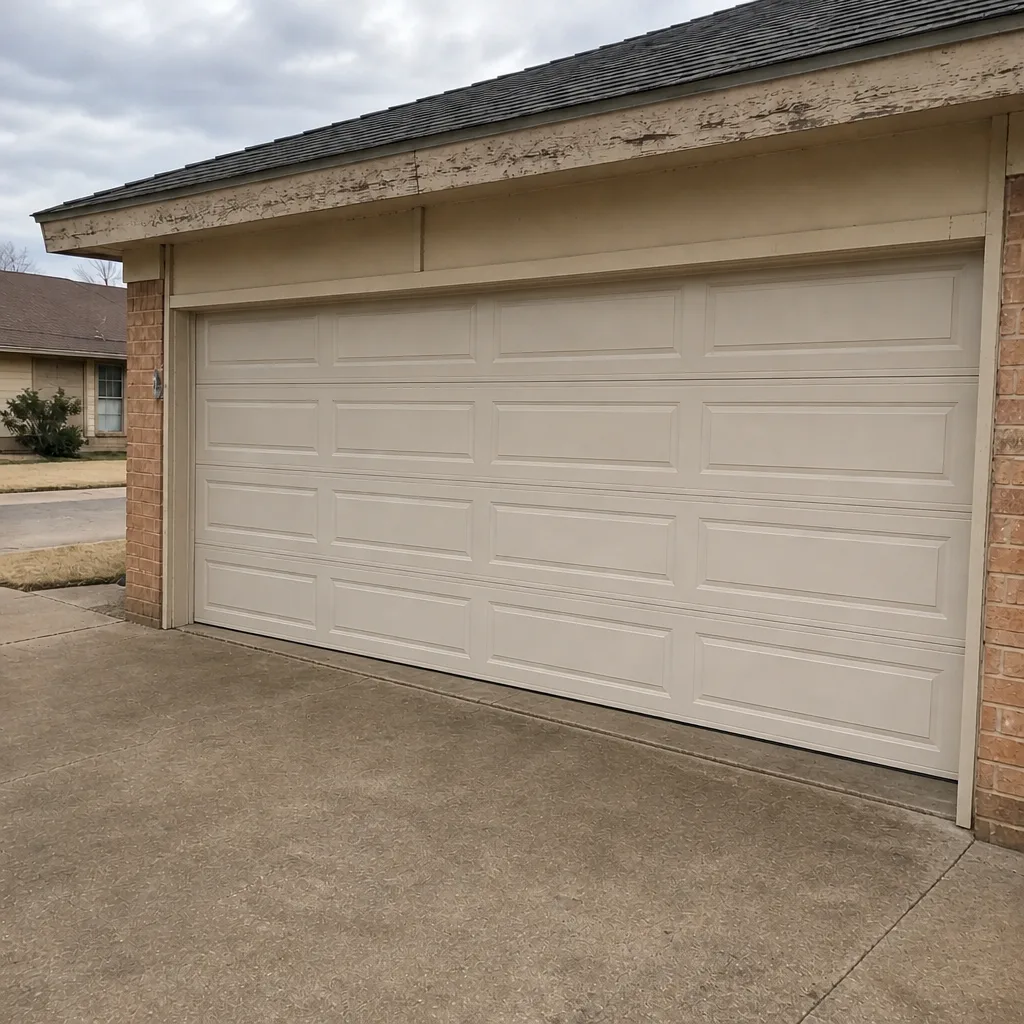 After
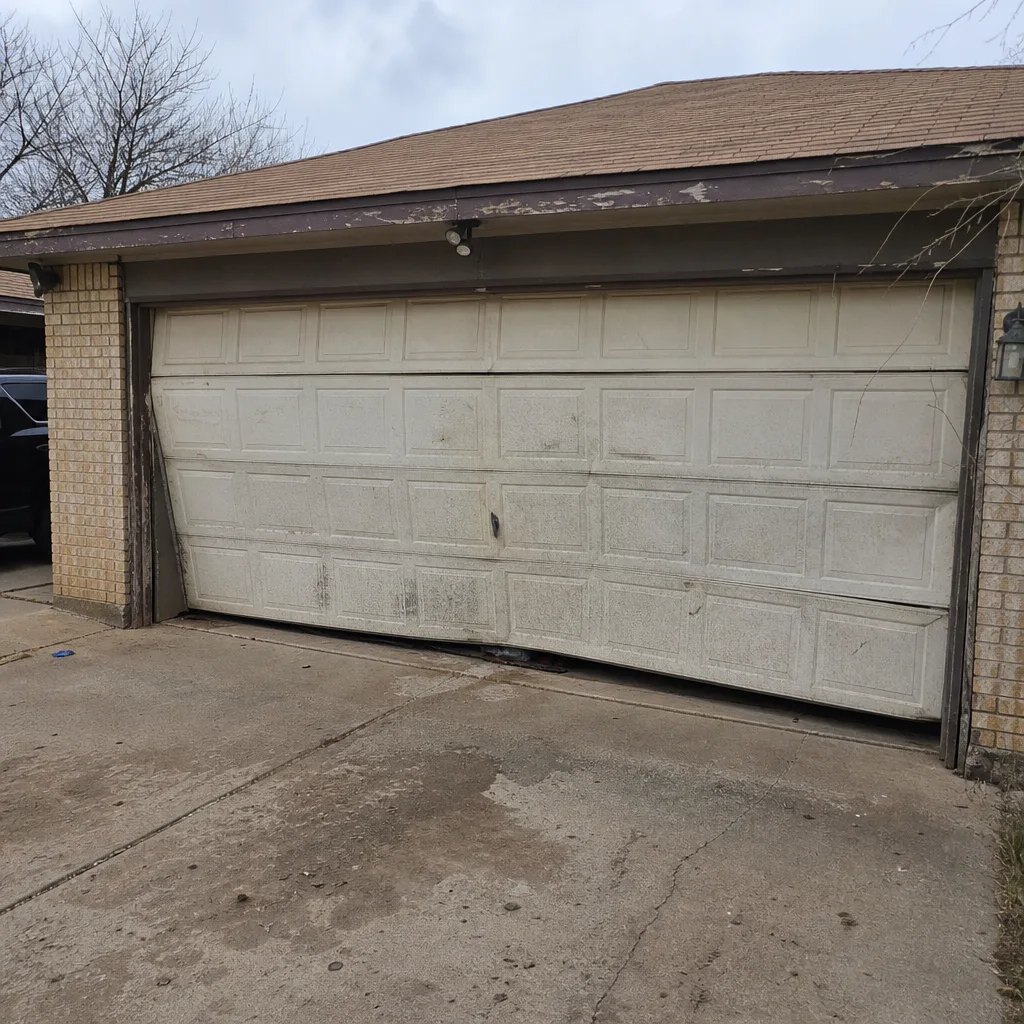 Before
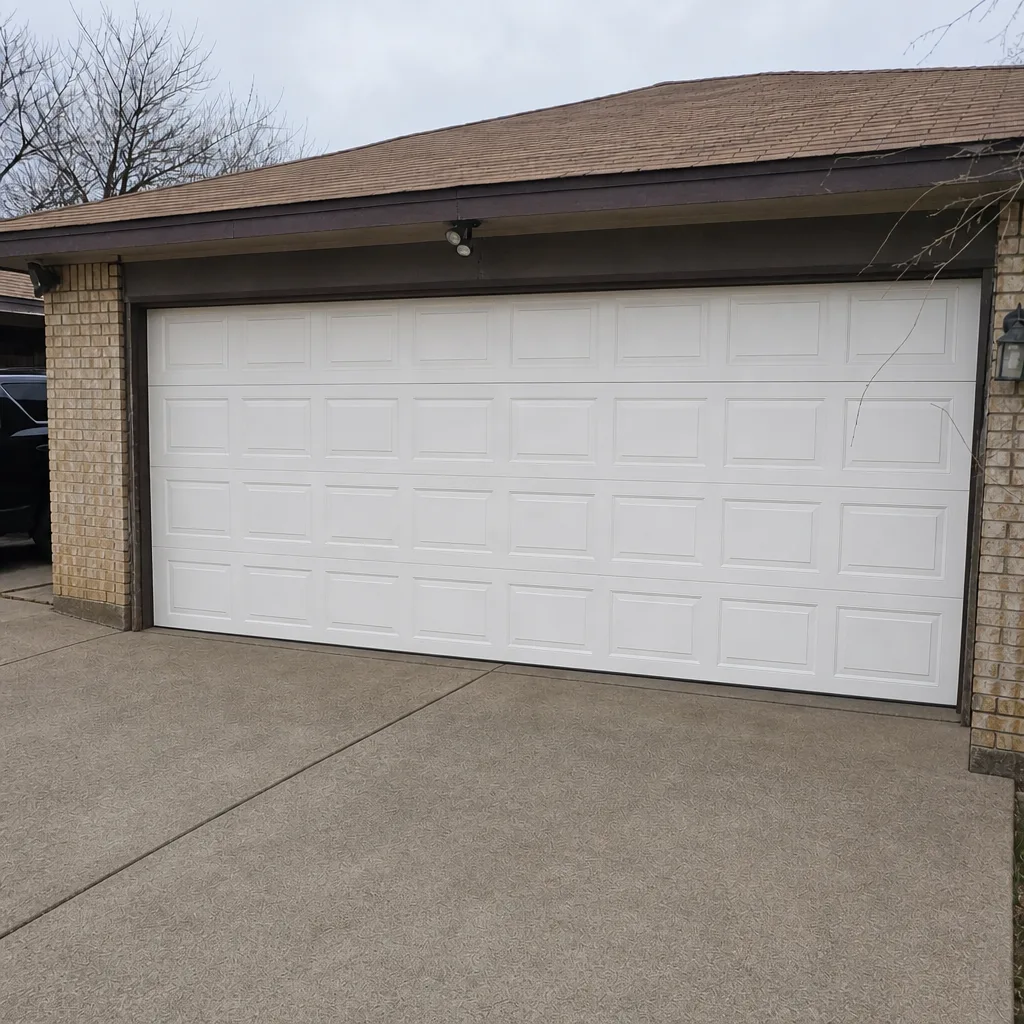 After
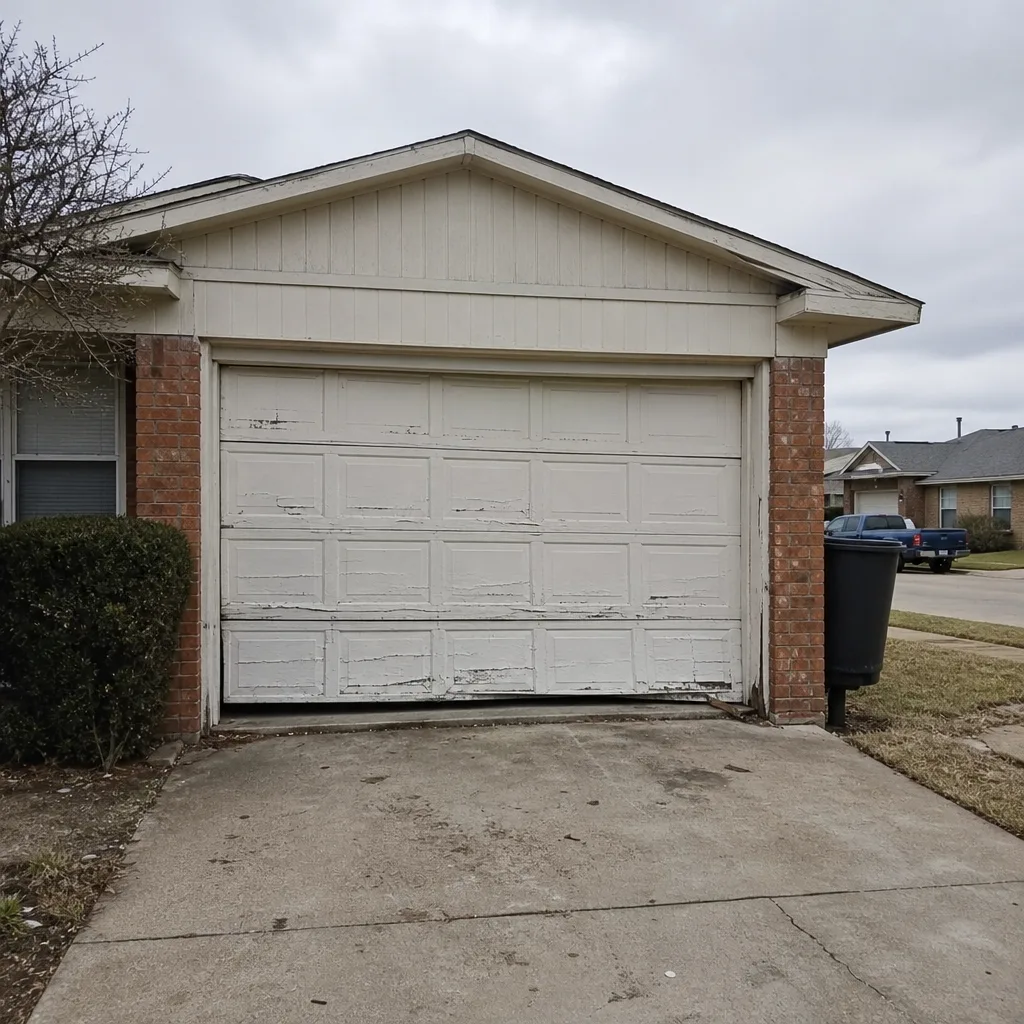 Before
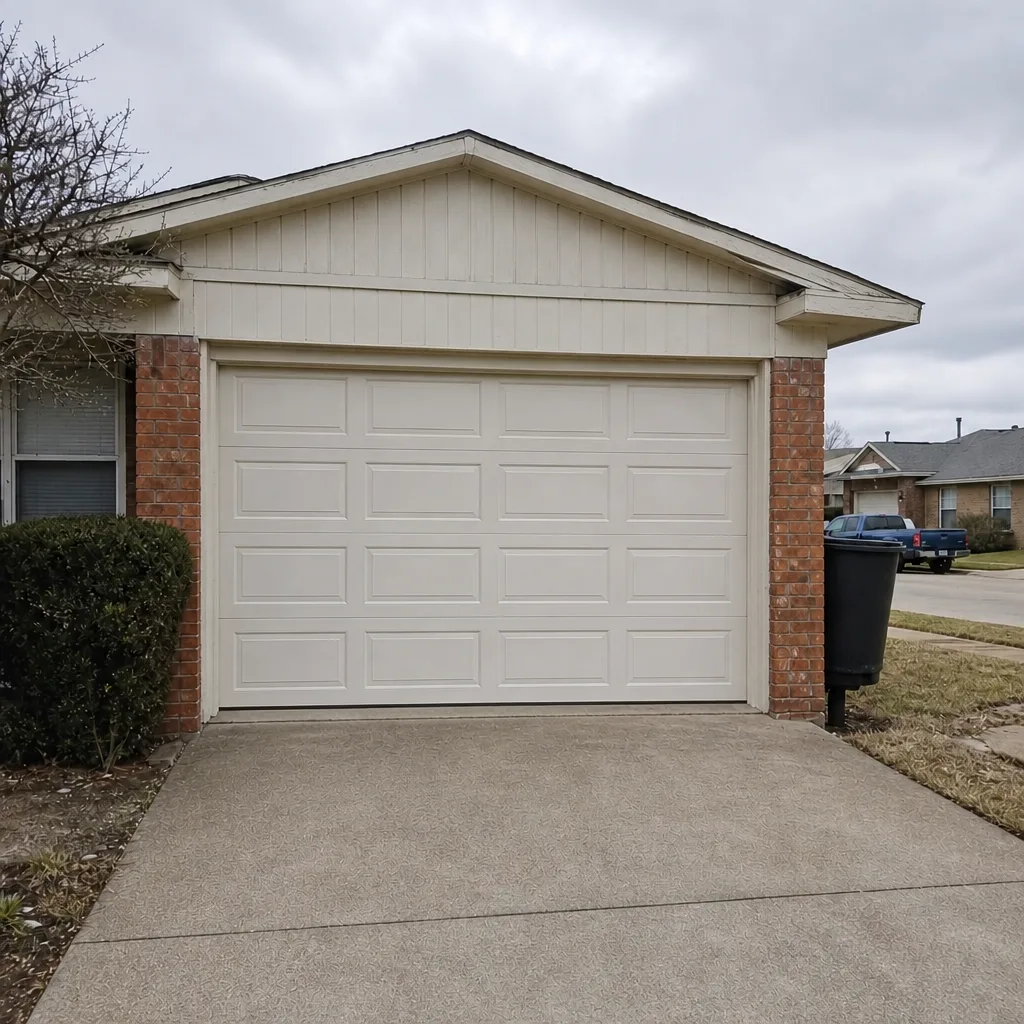 After
Common Mistakes to Avoid
- Greasing the tracks. Grease collects Odessa dust and turns into a grinding paste. Spray a light silicone product on the rollers and hinges, never a heavy grease on the track.
- Adjusting a torsion spring without training. This is the most dangerous DIY around a garage door. Springs store enormous energy and can release it in an instant. Leave the torsion springs and cables to a trained technician.
- Replacing one spring on a pair. Matched springs are usually replaced together. Replacing one leaves the door unbalanced and wears the other out faster.
- Ignoring a small dent or wobble. A door that shudders when it closes is telling you the balance has drifted. Waiting makes a cheaper fix into a spring or opener replacement.
- Matching springs by eye. Springs are matched by wire gauge, length, coil count and door weight, not by how they look. A wrong spring is a safety problem, not a warm-up.
- Replacing a door just because the opener is old. Get the door inspected first. A well-balanced door often outlasts two openers.
- Assuming a brand mismatch is a problem. A Clopay, Amarr or Wayne Dalton door can run on a LiftMaster, Genie or Chamberlain opener as long as the opener is rated correctly. Don’t pay for replacements you don’t need.
When to Call a Professional
Call a professional when a door is heavy by hand, won’t stay halfway up, reverses at random, drops out of the track or has a visibly broken spring or frayed cable. Those are the calls where a trained technician is worth the visit before anything else is attempted. Also call when a door is over your head on the DIY side, like board-level opener diagnostics, torsion spring work or a full track realignment. For routine noise, dust and lubrication, you can handle most of it yourself with the annual checklist above.
If you’re not sure which of those you’re in, get a free estimate and let a technician tell you. Odessa Garage Door Service offers free estimates in Odessa, with a written price agreed before any work starts. Call (844) 765-2569. We answer 24/7. Fast dispatch from 7am to 7pm, Sunday through Friday.
Frequently Asked Questions
Most garage door repairs in Odessa are quoted per job rather than as a flat rate, because the part that fails (a roller, a spring, a cable, an opener gear) changes the workload. A broken spring or cable repair sits in the middle of the scale, while opener repair and minor adjustments are usually lower; a full replacement door is a separate budget. Call (844) 765-2569 for an exact quote. Estimates are free and the written estimate is the price.
Yes, for most repair calls we can schedule same-day. We answer 24/7, and fast dispatch runs from 7am to 7pm, Sunday through Friday. A call outside that window gets booked into the next opening. Call (844) 765-2569 for an exact time.
Yes. Heat breaks down lubricant, swings in temperature expand and contract steel parts, and fine caliche dust works its way into rollers, hinges and the opener rail. That combination wears rollers and hinges out faster here than in wetter climates and stresses springs and seals more. That’s why annual cleaning and lubrication matters more than the generic advice you’ll find on most door manufacturer sites.
Our technicians are experienced garage door specialists and we work with independent local professionals who are licensed and insured. Our technicians have up to 11 years of experience. Ask for the written estimate up front, which is standard on every job we quote.
No. Every job is quoted in writing before work begins, and the written estimate sets the final price. If a technician finds a second problem while on site, they’ll quote it separately. Nothing gets added to the bill without your approval. Call (844) 765-2569 for a free estimate.
Not usually. Modern openers (LiftMaster, Chamberlain, Genie) work with doors from Clopay, Amarr, Wayne Dalton or any comparable panel. What matters is that the opener is rated for the door’s weight and that the springs are matched to it. A brand mismatch alone is not a reason to replace either part. If you’re unsure, a quick inspection can confirm whether you’re compatible as-is.
The Bottom Line
Your garage door is the biggest moving piece of equipment on the house, and it needs the same informed attention as the HVAC or the roof. Springs, rollers, cables and opener gears wear in a predictable order, and Odessa’s heat and caliche dust accelerate that order. Learn the triage pattern, keep an annual check, and don’t touch torsion springs or cables yourself. Most repairs sit below the cost of replacing a full door, and the right diagnosis saves the easy-upsell tax. If the diagnosis is easier for us than for you, that’s what we’re here for.
Call (844) 765-2569 for a free estimate. We answer 24/7, and fast dispatch runs 7am to 7pm, Sunday through Friday.
Written by the team at Odessa Garage Door Service.